Leading
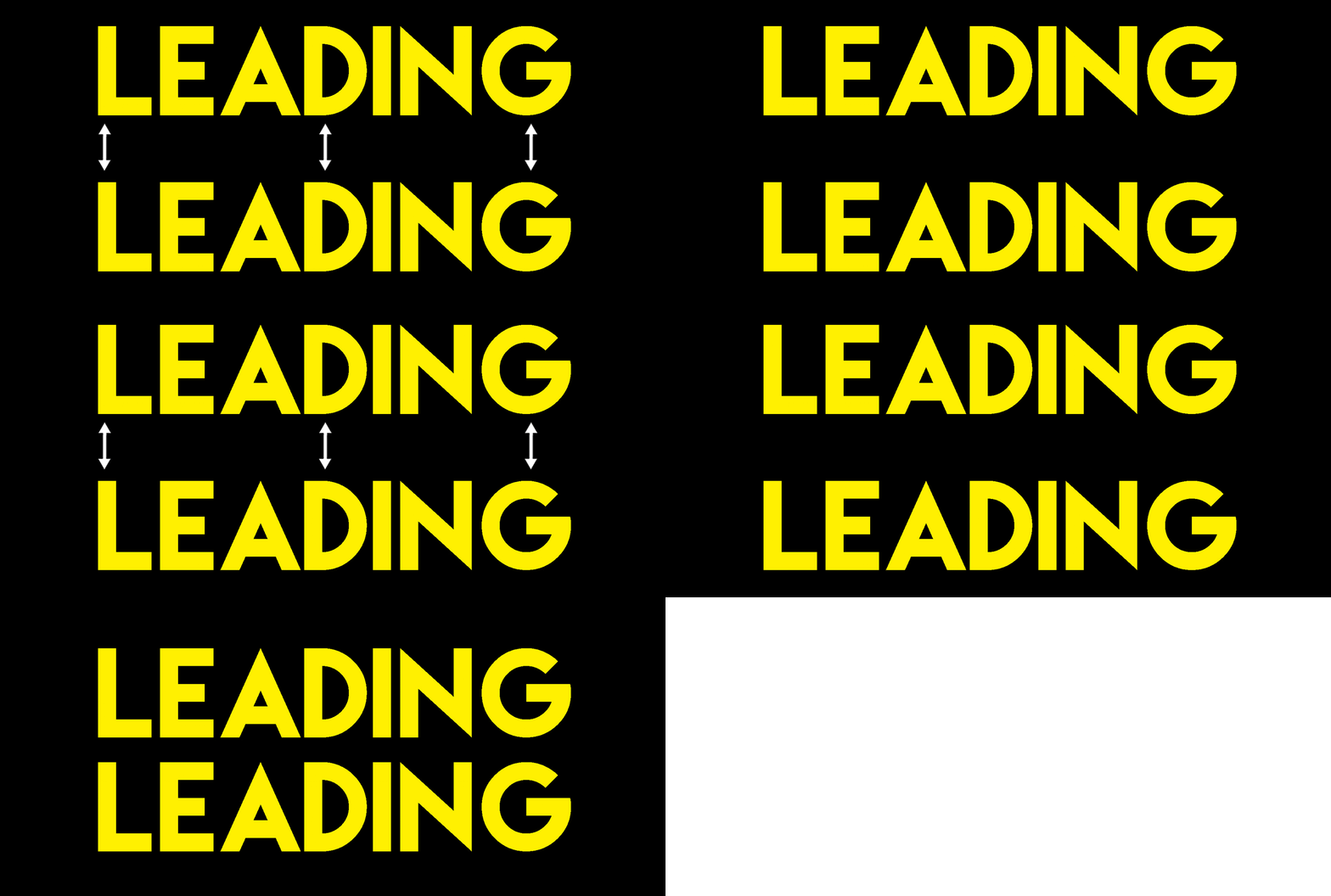
Typically websites are built to scroll vertically; the length of each page varies depending on the amount of content. Line spacing, also know as leading or line height, shapes the look of individual paragraphs and the page's overall style and structure. Designers use looser text to create a relaxed and inviting texture; they use tighter spacing to convey a sense of urgency or abundance while maximising real estate.
Designers also use vertical spacing to create relationships amoung heads, sub-heads, block quotes, and paragraphs. Breaks between elements should be apparent without leaving ugly and wastefull holes. A well-designed webpage should show balance between white space and denser fields of content. Just as with type size, leading should be set as a percentage, not as absolute value. Thus, when users change the type size preference in their browsers, the line height will change too.
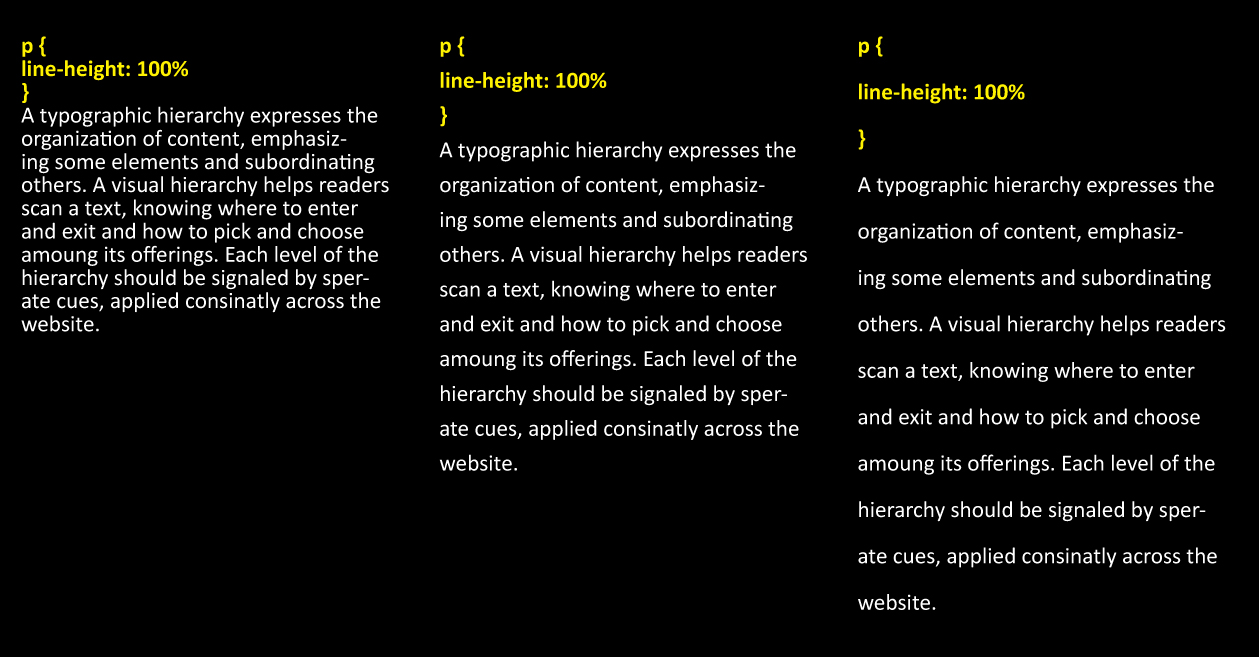
TYPOGRAPHIC COLOR The interplay between letterforms and the space around them creates what designers call 'color' of the text. While the default line spacing in print is 120% of the cap height, line spacing set to 150% is more common on a screen. Notice that at 100% the block is too crowded, while at 200% the lines of text drift apart.
alex.richardson-@live.co.uk
© 2015 All Rights Reserved Alexander J Richardson